

Why Fall Aeration and Seeding Are Essential for Northern Virginia Lawns
Maintaining a thick, healthy lawn in Northern Virginia and the Washington, D.C., region presents a unique challenge. Our area lies in the transition zone, where cool-season grasses must endure long periods of intense summer heat and humidity.
Tall fescue is well-suited to our region, but even the best lawn can lose turf each summer because of heat stress, drought, disease, insects, heavy foot traffic, and normal wear. Annual core aeration and seeding help repair this damage and prepare the lawn for another demanding year.
Why Cool-Season Lawns Need Fall Seeding
Unlike warm-season grasses, cool-season turf grows most actively during the cooler temperatures of spring and fall. Early fall provides an ideal combination of warm soil, cooler air, and more consistent moisture for seed germination and root development.
Seeding during this period gives new grass time to become established before winter and develop a stronger root system before the following summer.
Tall fescue is primarily a bunch-type grass. Although some newer cultivars have lateral-spreading characteristics, tall fescue does not spread and repair bare areas as aggressively as grasses such as Kentucky bluegrass. When individual plants are lost, new seed is usually needed to restore density.
Without regular overseeding, small thin areas can gradually become larger openings where crabgrass, nutsedge, and broadleaf weeds can become established.
What Core Aeration Does for Your Lawn
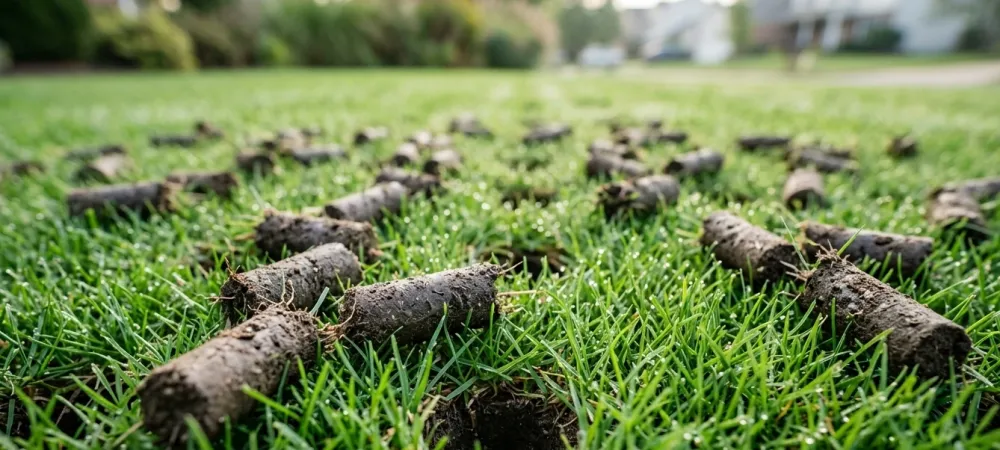
Core aeration removes small plugs of soil and thatch from the lawn. This process creates openings that allow air, water, and nutrients to move more effectively into the root zone.
Core aeration can help:
- Reduce soil compaction
- Improve water movement into the soil
- Increase oxygen around turfgrass roots
- Encourage deeper, healthier root development
- Improve nutrient availability
- Create better seed-to-soil contact
- Support beneficial soil and microbial activity
- Help the lawn recover from summer stress
Aeration is especially valuable in Northern Virginia, where many lawns contain dense clay soils that can become compacted by mowing, foot traffic, construction activity, and everyday use.
Why Aeration and Seeding Work Better Together
Spreading grass seed over a compacted lawn does not guarantee successful establishment. Seed needs direct contact with the soil, adequate moisture, and suitable temperatures to germinate.
Core aeration creates thousands of openings across the lawn. These openings provide protected areas where seed can contact the soil and retain moisture. That is why combining aeration with seeding typically produces better results than simply broadcasting seed over the existing turf.
As the new grass develops, it fills thin areas, increases turf density, and helps the lawn compete naturally with weeds.
Better Seed Produces a Better Lawn
Not all grass seed is created equal. Many inexpensive seed mixtures contain older varieties, lower-quality cultivars, filler, or undesirable weed seed. A successful aeration and seeding program begins with selecting high-quality cultivars proven to perform under the conditions they will actually face.
Nuleaf Lawn Care uses a premium tall fescue blend custom-produced for us by Turf Merchants, Inc. We select high-performing cultivars using Virginia and Maryland turfgrass recommendations and results from the National Turfgrass Evaluation Program. Cultivars may vary based on availability and the latest research, allowing us to continually use some of the best-performing varieties for our region.
Our blend is chosen for characteristics that matter in Northern Virginia lawns, including:
- Excellent overall turf quality
- Dark-green genetic color
- Fine leaf texture
- Strong turf density
- Lateral-spreading and recovery characteristics
- Improved resistance to gray leaf spot disease
- Better performance under regional heat, humidity, and disease pressure
Using several carefully selected cultivars also adds genetic diversity to the lawn. Because cultivars respond differently to environmental stress and disease, a professionally designed blend can be more dependable than relying on a single grass variety.
What Blue-Tag-Certified Seed Means
Nuleaf’s tall fescue blend is blue-tag certified. Certified seed is produced and inspected in accordance with established standards to verify its identity, purity, and quality.
The seed we use:
- Contains named, premium tall fescue cultivars
- Is blue-tag certified
- Contains no filler
- Is labeled with zero weed seed
- Meets strict standards for purity and cultivar identity
This distinction matters. Weed seeds and undesirable grass varieties introduced during overseeding can create long-term problems that are difficult or impossible to correct selectively. Starting with pure, certified seed helps ensure we add desirable turfgrass—not introduce weeds or inferior grasses into your lawn.
The difference may not always be obvious on the day the seed is applied, but it becomes much more noticeable as the lawn matures.
The Importance of Gray Leaf Spot Resistance
Gray leaf spot can be particularly damaging to young tall fescue during warm, humid weather. Newly seeded lawns may be especially vulnerable when extended leaf wetness and high humidity create favorable conditions for disease development.
Selecting cultivars that have demonstrated improved gray leaf spot resistance does not eliminate every possibility of disease. However, it can reduce risk and give the developing lawn a stronger foundation.
This is one reason Nuleaf evaluates more than color alone when choosing grass seed. Appearance is important, but regional performance, disease resistance, density, and long-term durability are equally critical.
Aeration and Seeding Are an Investment in the Year Ahead
It is easy to think of aeration and seeding as treatments only for lawns already in poor condition. In reality, it is one of the most important preventive services for maintaining a healthy cool-season lawn.
A thick lawn begins with healthy soil, strong roots, and high-quality turfgrass cultivars. Annual fall aeration and seeding help restore turf lost during the summer, strengthen thin areas, and prepare the lawn for the challenges of the following year.
The results may begin with new seedlings in the fall, but the greatest benefits are often seen the following spring and summer: a denser, darker-green lawn with fewer openings for weeds and a better ability to withstand environmental stress.
Schedule Your Fall Aeration and Seeding Service
Fall is the most important season for rebuilding a cool-season lawn in Northern Virginia and the Washington, D.C., region. Because the ideal establishment period is limited, planning early is important.
Contact Nuleaf Lawn Care to learn more about our professional core aeration and seeding program and reserve your place on our fall schedule.
Build a better lawn this fall—and give it a stronger start for next year.